Belgian apples export to China expansion following signing protocol
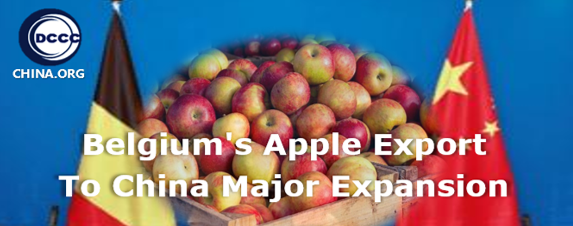 Belgium's fresh produce, especially apple export to China is entering a major expansion phase, highlighted by a historic May 2026 agreement allowing Belgian apples into the Chinese market for the first time, an excellent news for Belgium’s exporters and fruit sector.
Look at this recent article from Belga News Agency
Belgian apples will be allowed into China under a newly signed protocol between the Federal Agency for the Safety of the Food Chain (FASFC) and China's General Administration of Customs (GACC).
The protocol lays out the phytosanitary conditions Belgian apples must meet before they can be sold on the Chinese market.
Related authority called the signing "an important and significant step for our fruit sector". describing it as a "historic agreement" and "excellent news for our farmers and our fruit sector."
.... See more from Belga News Agency here
While China has been a primary non-EU destination for Belgian agri-food trade, strict phytosanitary regulations heavily dictate exactly which fresh items can be shipped.
The first is the Fresh Fruits Approved for Export
Belgian Apples (New for 2026): On May 25, 2026, Belgium's Federal Agency for the Safety of the Food Chain (FASFC) signed a protocol with China’s General Administration of Customs (GACC). This agreement officially ends years of negotiations. First shipments are scheduled to commence at the beginning of the next growing season, provided that Belgian orchards register under the new phytosanitary conditions.
Conference Pears: This remains Belgium's premier and most successful fresh fruit export to China. China is the largest importer of Belgian Conference pears in Asia. Chinese consumers heavily Favor them due to their distinct shape and taste compared to native varieties, serving as a popular off-season addition to local markets.
Other Fresh Produce Under Strict Regulation
The FASFC maintains specific export instruction frameworks for other items, though market penetration remains specialized or bound to localized business-to-business demand.
Governed by rigid phytosanitary protocol instructions. Belgian Endive (Witloof).
Allowed subject to strict custom clearance and TRACES NT tracking systems. Bell Peppers (Paprika)

Processed Alternatives
While fresh vegetable exports are restricted by quarantine barriers, Belgium—specifically the Flanders region—is a dominant global powerhouse for frozen and processed vegetables. A massive cluster of Belgian agro-export value to Asian markets comes from frozen potato products (Belgian fries) and frozen vegetable mixes rather than raw fields.
Here are for Belgium apple exporters, what are the exact phytosanitary requirements and orchard registration steps required by the FASFC for the upcoming apple season?
Following the landmark May 2025/2026 protocol signed between Belgium's Federal Agency for the Safety of the Food Chain (FAVV/FASFC) and China's General Administration of Customs (GACC), a strict regulatory framework must be followed before the upcoming growing season.
To participate in the initial export shipments, growers and packing facilities must strictly follow the mandatory registration steps and phytosanitary criteria.
Phase 1: Orchard & Packinghouse Registration Steps
Belgian orchards and packing facilities cannot export directly until they are approved by both FAVV and GACC.
Growers and exporters must file a formal application through the FAVV Export Portal ahead of the export season. it is called Submit Application to FAVV:
The orchard must establish a comprehensive traceability and quality management system. It must track all blocks, agricultural inputs, and harvest dates. that is the step of Implement Traceability:
FAVV inspectors audit the applicant's Self-Checking System (Autocontrole / ACS). which is the process of National Validation.
FAVV compiles the official list of compliant Belgian orchards and packing houses and transmits it to China's GACC. that is the GACC Transmission.
GACC reviews the list, occasionally requesting random spot-checks or remote audits, before officially publishing the approved registration numbers online. it is an important step of Final GACC Approval.
Phase 2: Key Phytosanitary & Field Requirements
To pass inspection, production areas must adhere to stringent GACC quarantine standards modeled after existing European top-fruit protocols:
Orchards must utilize official monitoring, prevention, and control experts to manage target quarantine pests (such as European fruit flies, specific mites, and blight pathogens). it is an key Integrated Pest Management (IPM):
Cultivation areas must be free from any environmental pollution or adjacent wild disease vectors that could threaten fruit health. which is Contamination-Free Buffer
The orchard blocks must not have had any major outbreaks of critical plant diseases within the past two seasons. History of Compliance is crucial for the reason of food safety.
Phase 3: Packing, Sorting, & Cold Chain Mandates
The protocol dictates zero tolerance for physical contaminants at the packing stage:
During packaging, apples must go through rigorous sorting to eliminate any deformed, rotten, or insect-damaged fruits. fruit must Strict Sorting & Cleaning.
The final packed product must be 100% free from soil, roots, twigs, and leaves. it is necessary Zero Foreign Matter.
Export-bound apples must be stored in clearly separated, dedicated cold-storage zones to avoid cross-contamination with uncertified fruit. that is called Physical Segregation.
Shipments typically require temperature-controlled transit where cold sensors monitor the containers continuously. Data logs must be downloaded and submitted to Chinese customs upon arrival, it is In-Transit Cold Treatment.
Phase 4: Customs Certification & Digital Logistics
Every shipment requires exact international paperwork to pass the Chinese border:
Issued by FAVV, validating that the shipment meets all conditions of the bilateral protocol, that is Phytosanitary Certificate
Authorized officers apply a numbered, tamper-proof seal to the loaded container door. This seal number is explicitly listed on the phytosanitary documents, which is Customs Seal.
Independent of the fruit protocol, the Belgian exporting entity must maintain an active registration profile on the China Single Window (CIFER) platform under GACC Decree 248/249 requirements. that is called Single Window / GACC Registration.

To export a specific variety of apple (like Jonagold or Belgica), you need to prepare select right fresh produce and market:
Market Selection: Choosing the Right Apple Variety
Securing export market access is heavily dependent on consumer taste preferences. Experts from major top-fruit cooperatives like the Belgian Fruit Valley (BFV) point out that while Europe favors balanced or slightly tart varieties, the Chinese market strongly prioritizes firm texture, long shelf life, and distinct sweetness.
The primary varieties targeted for export preparations include:
Jonagold / Red Jonaprince: These represent a massive share of Belgian apple acreage. Exporters are evaluating their sweetness levels to ensure they align with premium Chinese retail preferences.
Club Varieties: Emerging, highly controlled club varieties optimized for crispness and elevated sugar levels are viewed by trade associations as the most viable path to compete with domestic Chinese fruits and existing Southern Hemisphere imports.
Contacting the FAVV Local Control Units (LCE)
Phytosanitary tracking, orchard inspections, registration handling, and export certification are not managed from a central Brussels office. They are processed at the regional level through the Lokale Controle-eenheden (LCE) of the FAVV / FASFC.
Next Action Step for Growers
To ensure your orchard is listed in time for the first trade window, you should email your regional LCE to request the specific "Aanvraagformulier voor exportcertificering - Verse Groenten en Fruit" (Export Certification Application Form). This will trigger the scheduling of your mandatory pre-harvest plot audit.
Belgium fruits in the Chinese market, are most welcome by Chinese consumers in major cities
Do you realized that the absolute most welcome Belgian fruit among Chinese consumers is the Belgian Conference Pear, with Belgian Apples quickly emerging as a highly anticipated new entry.
For over a decade, Belgium's fruit exports to China have centered heavily around its world-renowned top fruits, adapted specifically to meet the flavor and texture preferences of the Chinese market.
Belgian Conference Pears exports to China (The Market Leader)
The Conference pear is the ultimate crown jewel of Belgian agricultural exports to China. Promoted extensively by major cooperatives like the Belgian Fruit Valley (BFV) and distributed heavily through giants like Dole China, this fruit has successfully expanded into dozens of Chinese cities.
Green Conference Pears: These have been a staple in China for over 12 years. While traditional Chinese pears are round and crunchy, Chinese consumers love the Belgian Conference pear because it becomes soft, exceptionally juicy, and highly aromatic when ripe. It is particularly popular among younger demographics and senior citizens, who find the soft texture easier to chew and digest.
Red Conference Pears: Introduced more recently to the market, Chinese buyers highly Favor the red variety due to its delicate fragrance and its vibrant red color, which holds significant cultural appeal for gifting and festive occasions in China.
Belgian Apples exports to local China's cities (The Strategic Newcomer)
Following years of strict phytosanitary negotiations, a historic market access protocol was officially signed, opening the gates for Belgian apples to enter the Chinese market.
Exporters are cautiously optimistic about using their existing Truval brand pear networks to introduce tailored apple varieties.
Because China is the world's largest consumer of apples, high-quality, traceable Belgian varieties (such as those managed by cooperatives like BelOrta or Vergro) are expected to compete strongly in the premium, imported fruit segment.
Why Chinese Consumers Prefer Them
Chinese consumers overwhelmingly favor fruits with high sugar content and rich flavor profiles. High Sweetness (Brix Levels).
Imported European premium fruits are heavily trusted in China for their strict quality control, lack of chemical residues, and reliable planning. Traceability and Food Safety.
Beautifully packaged imported fruits are treated as premium luxury goods frequently gifted during major holidays like the Mid-Autumn Festival and Chinese New Year, Premium Gifting Culture.
The present situation Belgium appels and piers in Chinese market
The market situations for Belgian apples and pears in China are vastly different, highlighted by a historic breakthrough for apples alongside established niche growth for pears.
Belgian Apples: Brand New Market Access
The current situation for Belgian apples is a major milestone of imminent entry into the Chinese market.
The Federal Agency for the Safety of the Food Chain (FASFC) in Belgium and China’s General Administration of Customs (GACC) officially signed a phytosanitary export protocol, ending negotiations that began in 2019. Historic Export Protocol:
The agreement paves the way for the very first commercial shipments of Belgian apples to arrive in Chinese stores at the beginning of the next growing season. TimeLine for Shipments
To begin exporting, Belgian fruit orchards and packing houses must comply with rigorous Chinese phytosanitary regulations and be officially registered. Strict Conditions.
Belgian Pears: Market Maturity and Consumer Shift
Belgian pears (specifically the iconic Conference pear) have enjoyed a mature, highly integrated presence in China for over a decade, though they face recent shifting preferences.
Belgium is Europe's leading pear producer. China is the largest importer of Belgian Conference pears in Asia. The market is heavily supported by major coordination partnerships with fruit giants like Dole China. it is important fresh produce Dominant Western Pear
To capture premium consumers, exporters have expanded into high-end varieties like the Belgian Red Conference and Sweet Sensation pears. These serve as off-season complements to domestic Chinese pears, that is New Red Varieties.
Despite a record production season in Europe, exporters have faced recent headwinds. A cultural and sensory mismatch regarding the softer texture and unique flavor profile of European pears—compared to the ultra-crisp, watery local Chinese pear varieties—has slowed broader mainstream adoption, keeping them localized as premium, exotic treats in metropolitan supermarkets. that is Recent main Challenges.